Provincial Coverage
Provincial health plans generally do not cover routine vision care for working-age Canadians, with some exceptions for those with a diagnosed eye disease. This makes comprehensive coverage under group vision care plans critically important in supporting early diagnosis of eye diseases, ongoing eye care, and maintaining the vision health of working Canadians.
Coverage varies by province and territory. Check with each jurisdiction for details on coverage. Use the links for more information on your province or territory’s coverage for vision care.
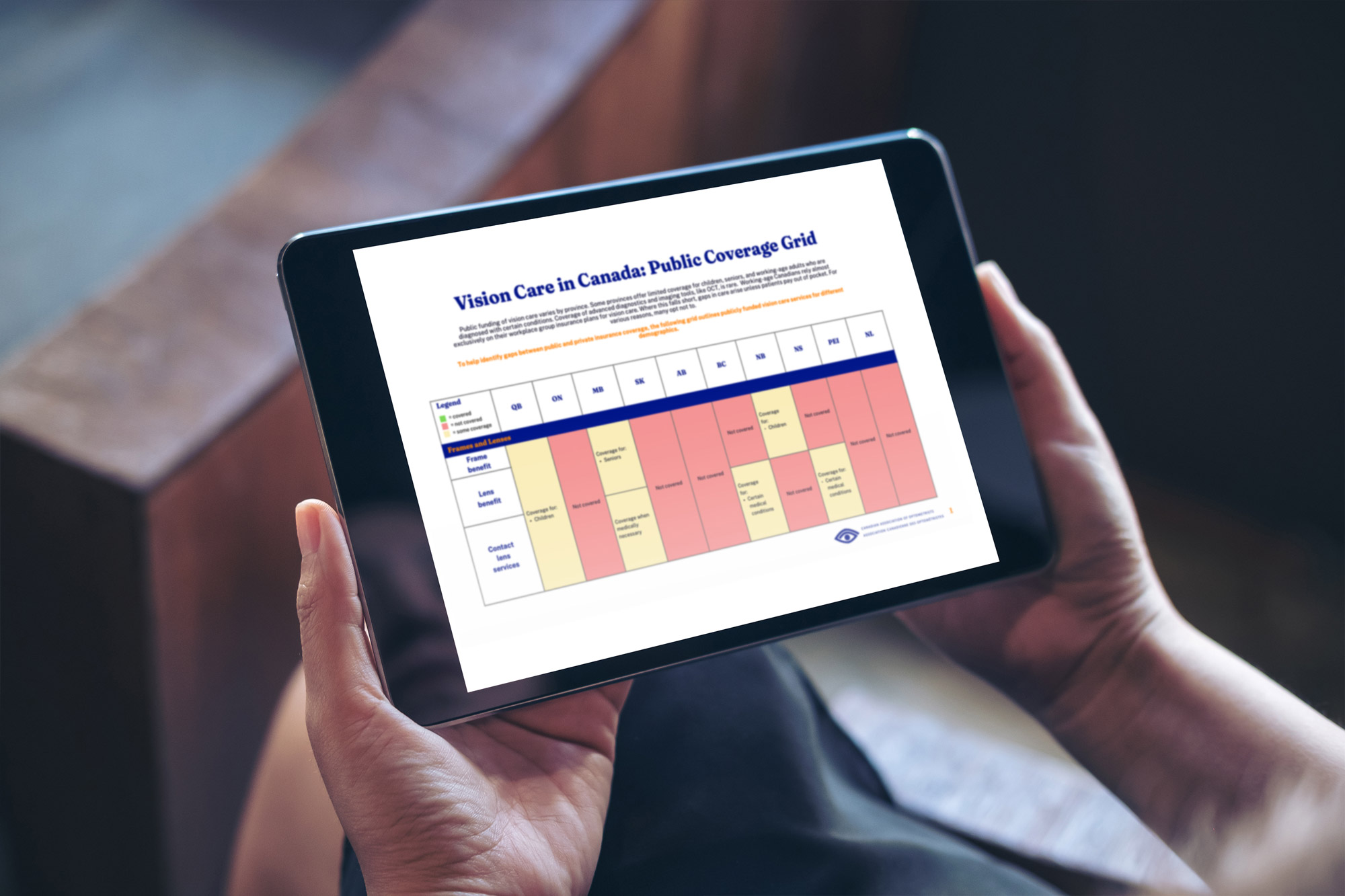
Vision Care in Canada: Public Coverage Grid
Public funding of vision care varies by province. Some provinces offer limited coverage for children, seniors, and working-age adults who are diagnosed with certain conditions. Coverage for essential diagnostic imaging tools, like OCT, is rare.
Working-age Canadians rely almost exclusively on their workplace group insurance plans for vision care. When this falls short, gaps in care can arise unless patients pay out of pocket, which many are unable to do, or when they do not fully understand the risks of missing elements of today’s comprehensive eye exams.
Did you know?
1 in 4 Canadians who have access to vision care benefits report not receiving services they need due to cost.
[Abacus 2020]
Group vision care plans
As clinical standards of practice evolve and new technologies become part of routine eye care, gaps in group vision care plans have grown because coverage has not kept pace across the group insurance industry.
Some insurers and plan sponsors have made changes to fill the gaps in their vision care benefits, and not just as a tool for attracting and retaining talent. By providing comprehensive best practice coverage these leaders have demonstrated a commitment to the vision care needs of plan members and have reduced the risk of the substantial costs often associated with later-stage eye disease including vision loss.

Vision Care Benefits Handbook
More information on common eye diseases, the impact on quality of life, modern diagnostic and imaging tools, and closing the gaps in vision care can be found in the CAO Handbook.
For a one-on-one discussion about vision care or a hard copy of the Handbook contact info@opto.ca.